Actual size and flowering may vary slightly based on season.
Burgundy Plum
Burgundy Plum is a Japanese plum with maroon skin and deep red flesh. The flavor is sweet and mild, with little or no tartness. The fruit holds on the tree for weeks, so the harvest stretches out. It needs about 300 chill hours and is self-fruitful, so one tree sets fruit.
Best for: a sweet, low-acid homegrown plum, a long picking season from one tree, and late-winter blossoms for bees.
Burgundy has maroon skin and deep red flesh with a sweet, mild flavor and little or no tartness. Pick it when fully colored.
The fruit keeps well on the tree for several weeks after it ripens, so one tree gives a long picking season.
It needs about 300 chill hours, and most of the Valley gets about 300 to 400. It is self-fruitful, so one tree is enough.
Paint the trunk white to prevent sunburn. Cover ripening fruit from birds. Borers can tunnel into the base of young trees.
- Row of fruit trees15 ft apart
- Open planting15-20 ft apart
Water new trees often while they root in. Once established, soak the root zone at least 18 inches deep, and up to about 3 feet, about every 1 to 2 weeks while the tree is growing. In winter, water about once a month.
Prune in January, before the buds break. Plums fruit on short spurs, so prune lightly and keep the fruiting spurs. Remove dead and crossing branches.
Feed in early spring as the tree wakes up, again in May before the heat, and again in September.
Paint the trunk with white tree paint to prevent sunburn. Birds find ripe fruit first, so cover the tree with bird netting or bag the fruit before it ripens.
Drops its leaves in winter and leafs out again in spring.
Drainage test first. Dig the hole and fill it with water. If water is still sitting in the hole a day later, you likely hit caliche, clay or hard soil, so fix the drainage before planting. If it drains very fast, the soil is sandy. Standing water around roots is a common reason new plants fail.
Weed cloth. Cut it away from the planting hole and where the roots will spread. Remove any plastic sheeting completely, since it keeps water and air out of the soil.
Rock or decomposed granite with no soil underneath. Bring in soil close in texture to your native soil, mix it with the soil below, and build up enough depth for roots before planting.
If you can break through. Use a breaker bar, pick, or jackhammer. Dig through the caliche and break out the solid chunks. Backfill with the soil you dug out, with no compost or manure in the hole. Confirm drainage before planting.
If you cannot break through. Dig narrow holes through the hard layer beside the root ball, not under it, and refill them with the same soil, not gravel. If it still will not drain, plant on a low mound of the same soil.
Root ball. Check the outside edges for any roots circling around. Loosen or cut those so they grow outward. Do not break up the center of the root ball.
Depth. The top of the root ball should sit at or just slightly above the surrounding soil level. Planting too deep can lead to rot and kill the plant.
Drip emitters. At planting, put the emitters on the root ball, on different sides of the plant. After about 2 months, move them to the outer edge of the root ball. Over the first year, add emitters farther out toward the edge of the branches as roots grow. Once a plant is rooted, never water only at the trunk.
Will it fruit in the Valley?
Yes, it is a low-chill variety needing about 300 chill hours, and most of the Valley gets about 300 to 400 a year. Pick low-chill varieties like this one for a reliable crop.
What does Burgundy plum taste like?
It tastes sweet and mild, with little or no tartness, and has maroon skin and deep red flesh. Pick it when fully colored.
How long is the harvest?
The harvest is long, because the fruit ripens in summer and holds on the tree for several weeks, so you can pick over a long stretch.
Do I need two trees for fruit?
No. It is self-fruitful, so a single tree sets fruit on its own, which makes it a good pick for a small yard.
When should I prune a plum tree?
Prune in January, before the buds break. Plums fruit on short spurs, so prune lightly and keep the fruiting spurs.
How big does it get?
Size depends on the variety and the rootstock it is grafted on. Plum trees range from about 10 feet to much larger, so plan the space before planting.
How often should I water it?
Water new trees often while they root in. Once established, soak it deep, at least 18 inches, about every 1 to 2 weeks while it is growing and about once a month in winter.
When should I fertilize?
Feed in early spring as it leafs out, again in May, and again in September.
When is the best time to plant it?
Plant bare-root trees in January or early February, and container trees in fall or spring. Avoid planting in summer, when new trees struggle.
Does the trunk need protection from sun?
Yes. Paint the trunk with white tree paint to prevent sunburn in the Valley.
How do I keep birds off the fruit?
Birds find ripe fruit before you do. Cover the tree with bird netting, or slip bags over the fruit before it ripens.
Does it attract bees?
Yes. The late-winter flowers feed bees and other pollinators, which also helps the fruit set.

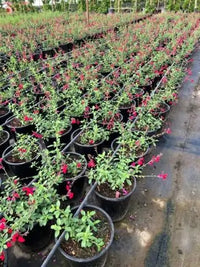


Burgundy Plum for sale in Arizona, delivered to you
Burgundy Plum is a self-fruitful Japanese plum with maroon skin, deep red flesh and a sweet, mild flavor. Below is what to expect, including chill hours, harvest, planting, watering, pruning, feeding, sunburn, birds and borers.
Sourced from trusted Arizona growers and delivered directly to your door, job site, or property. We deliver across the Valley and to nearby towns, and quote delivery anywhere else in Arizona.
Burgundy plum in Phoenix
Burgundy needs about 300 chill hours, and most of the Valley gets about 300 to 400. It is self-fruitful with sweet, deep red fruit.
Burgundy plum flavor
It has maroon skin, deep red flesh and a sweet, mild flavor with little or no tartness.
Burgundy plum harvest
The fruit holds on the tree for several weeks after it ripens, giving a long picking season from one tree.
How to prune a plum tree
Prune in January while dormant. Plums fruit on short spurs, so keep pruning light.
Watering a plum tree in the Valley
Soak the root zone at least 18 inches deep, about every 1 to 2 weeks while growing, and about once a month in winter.
When to plant a plum tree in Arizona
Plant bare-root trees in January or early February and container trees in fall or spring, and avoid planting in summer.
We deliver across the Valley, from Phoenix, Scottsdale and Mesa out to San Tan Valley, Maricopa and Casa Grande, and up to Prescott, Sedona, Payson and Globe. See delivery areas and rates.