


Actual size and flowering may vary slightly based on season.
Old Mexico Prickly Pear
Old Mexico Prickly Pear is a nearly spineless selection with large, light green pads that have wavy, scalloped edges. Yellow flowers open in late spring and early summer, followed by edible reddish-purple fruit. It grows into a fence-like clump about 4 to 6 feet tall and 6 to 8 feet wide. It takes heat and full sun, handles light shade, and is hardy to about 10°F.
Best for: low-water screens and barriers, accent and specimen spots, large pots, and yards that want the prickly pear look with far fewer spines.
It grows about 5 feet tall and 8 feet wide in a fence-like habit. Plant about 6 to 8 feet apart for a low-water screen or barrier.
Its large, light green pads have wavy, scalloped edges that give it form on its own. Use it as an accent in a desert or low-water landscape.
It performs well in the ground or in a large container. Use well-drained soil and let it dry between waterings.
It spreads 6 to 8 feet wide, so it crowds small beds. The pads have almost no spines but still carry tiny glochids, so handle them with gloves.
- Screen or barrier6-8 ft apart, center to center
- Plant to plant6-8 ft apart, center to center
Wait about a week after planting before the first water, then water every other week while nights stay above 60°F. Once rooted, water once or twice a month in summer. Extra water in a very dry summer keeps pads from shriveling.
It does not need fertilizer. If you feed it, use a light, diluted feeding in spring or early summer only. Prune off pads at the joints as needed to keep a screen row tidy.
It is hardy to about 10°F. Cover young plants with frost cloth on a hard freeze night.
Drainage test first. Dig the hole and fill it with water. If water is still sitting in the hole a day later, you likely hit caliche, clay or hard soil, so fix the drainage before planting. If it drains very fast, the soil is sandy. Standing water around roots is a common reason new plants fail.
Weed cloth. Cut it away from the planting hole and where the roots will spread. Remove any plastic sheeting completely, since it keeps water and air out of the soil.
Rock or decomposed granite with no soil underneath. Bring in soil close in texture to your native soil, mix it with the soil below, and build up enough depth for roots before planting.
If you can break through. Use a breaker bar, pick, or jackhammer. Dig through the caliche and break out the solid chunks. Backfill with the soil you dug out, with no compost or manure in the hole. Confirm drainage before planting.
If you cannot break through. Dig narrow holes through the hard layer beside the root ball, not under it, and refill them with the same soil, not gravel. If it still will not drain, plant on a low mound of the same soil.
Root ball. Check the outside edges for any roots circling around. Loosen or cut those so they grow outward. Do not break up the center of the root ball.
Depth. The top of the root ball should sit at or just slightly above the surrounding soil level. Planting too deep can lead to rot and kill the plant.
Drip emitters. At planting, put the emitters on the root ball, on different sides of the plant. After about 2 months, move them to the outer edge of the root ball. Over the first year, add emitters farther out toward the edge of the branches as roots grow. Once a plant is rooted, never water only at the trunk.
Is Old Mexico prickly pear spineless?
It is a nearly spineless selection with virtually thornless pads. The pads still carry tiny glochids, barbed hairs that stick in skin, so wear gloves when you handle it.
How big does it get?
It grows about 4 to 6 feet tall and 6 to 8 feet wide, in a fence-like habit.
How far apart should I plant it?
Plant about 6 to 8 feet apart center to center for a screen or barrier. The Spacing tab on this page counts plants for your row.
How fast does it grow?
It is a moderate to fast grower for a prickly pear.
Is the fruit edible?
Yes. The reddish-purple fruit is edible. Pick it with tongs and gloves, twist it off, and remove the glochids before peeling.
When does it bloom?
Yellow flowers open in late spring and early summer.
How cold can it take?
It is hardy to about 10°F. For a young plant on a hard freeze night, frost cloth that reaches the ground helps.
How often should I water it?
Water a new plant about every 2 weeks through its first summer. Once rooted, water once or twice a month in summer. Extra water in a dry summer keeps pads from shriveling.
Does it take full sun and heat?
Yes. It is very tolerant of heat and full sun, and it also grows in light or partial shade.
Does it need fertilizer?
No. It does not need fertilizer. If you do feed it, use a light, diluted feeding in spring or early summer only.
How do I prune it?
Cut off whole pads at the joints as needed. Long-handled loppers or tongs keep your hands back from the glochids.
Old Mexico vs spineless prickly pear: which one?
Both have almost no spines. Old Mexico grows larger, about 4 to 6 feet tall, and is hardy to about 10°F. Spineless prickly pear stays 3 to 5 feet and takes cold to about 0°F.


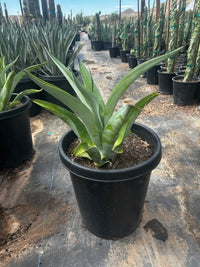
Old Mexico Prickly Pear for sale in Arizona, delivered to you
Old Mexico Prickly Pear is a spineless selection of a prickly pear from the south Texas coast and Mexico. People grow it for its wavy green pads, yellow flowers and fruit without the usual long spines. This page covers what to expect: size, spacing, water, cold, fruit and handling.
Sourced from trusted Arizona growers and delivered directly to your door, job site, or property. We deliver across the Valley and to nearby towns, and quote delivery anywhere else in Arizona.
Is Old Mexico prickly pear spineless?
It is a nearly spineless selection, chosen for its virtually thornless pads. The pads still carry tiny glochids, so handle them with gloves.
How big does Old Mexico prickly pear get?
Plan for about 4 to 6 feet tall and 6 to 8 feet wide. It grows in a broad, fence-like clump.
How far apart do you plant Old Mexico prickly pear?
For a screen or barrier, plant about 6 to 8 feet apart center to center. The Spacing tab on this page counts plants for your row.
How often do you water Old Mexico prickly pear in Phoenix?
Water a new plant about every 2 weeks through its first summer. Once rooted, water once or twice a month in summer, and little or none in winter.
How cold hardy is Old Mexico prickly pear?
It is hardy to about 10°F. Cover young plants with frost cloth on hard freeze nights.
Can you eat Old Mexico prickly pear fruit?
Yes. The reddish-purple fruit is edible. Remove the glochids before peeling.
Old Mexico vs spineless prickly pear
Both of them are nearly spineless. Old Mexico grows about 4 to 6 feet tall with wavy green pads. Spineless prickly pear stays 3 to 5 feet and is hardier, to about 0°F.
We deliver across the Valley, from Phoenix, Scottsdale and Mesa out to San Tan Valley, Maricopa and Casa Grande, and up to Prescott, Sedona, Payson and Globe. See delivery areas and rates.