Actual size and flowering may vary slightly based on season.
Pachycereus weberi
Pachycereus weberi, called candelabro in Mexico, is a giant tree-like cactus with a thick trunk and many upright bluish-green branches. Old plants can carry dozens of columns in a huge candelabra shape. At night it opens yellowish white flowers, followed by spiny fruit that is eaten raw or cooked, and its seeds have been ground into flour. It is slow growing and suits large desert landscapes.
Best for: a giant long-term specimen for a large desert landscape, with room for a wide candelabra of arms.
Old plants can carry dozens of upright branches on a thick trunk, up to about 30 feet across. Plant it where nothing will crowd it for decades.
It grows slowly but can reach 30 to 40 feet over time. A 25 Gallon plant gives it a head start.
The spiny fruit is eaten raw or cooked, and the seeds have been ground into flour for tortillas. The night flowers are yellowish white.
Frost below about 25 to 28°F can damage it, so cover the tips on cold nights. Keep it out of soggy soil, which causes rot. It is far too big for small yards.
- Closer grouping12 ft apart
- Open planting12-20 ft apart
Wait about a week after planting before the first water. Then water every other week while nights stay above 60°F. In cooler weather, water only after two to four weeks without rain.
Water deeply in the warm months only when the soil is dry, and give little or none in winter. Plants in pots dry out faster and need water more often than plants in the ground.
Plant it with the same side facing the sun as in the nursery. Cover a new plant with light shade cloth its first summer, then remove it.
Below about 25 to 28°F, frost can scar the stem tips. Cover the tips with foam cups or frost cloth that reaches the ground, not plastic. Take covers off in the morning.
Drainage test first. Dig the hole and fill it with water. If water is still sitting in the hole a day later, you likely hit caliche, clay or hard soil, so fix the drainage before planting. If it drains very fast, the soil is sandy. Standing water around roots is a common reason new plants fail.
Weed cloth. Cut it away from the planting hole and where the roots will spread. Remove any plastic sheeting completely, since it keeps water and air out of the soil.
Rock or decomposed granite with no soil underneath. Bring in soil close in texture to your native soil, mix it with the soil below, and build up enough depth for roots before planting.
If you can break through. Use a breaker bar, pick, or jackhammer. Dig through the caliche and break out the solid chunks. Backfill with the soil you dug out, with no compost or manure in the hole. Confirm drainage before planting.
If you cannot break through. Dig narrow holes through the hard layer beside the root ball, not under it, and refill them with the same soil, not gravel. If it still will not drain, plant on a low mound of the same soil.
Root ball. Check the outside edges for any roots circling around. Loosen or cut those so they grow outward. Do not break up the center of the root ball.
Depth. The top of the root ball should sit at or just slightly above the surrounding soil level. Planting too deep can lead to rot and kill the plant.
Drip emitters. At planting, put the emitters on the root ball, on different sides of the plant. After about 2 months, move them to the outer edge of the root ball. Over the first year, add emitters farther out toward the edge of the branches as roots grow. Once a plant is rooted, never water only at the trunk.
How big does Pachycereus weberi get?
It gets very big and can reach 30 to 40 feet tall and about 30 feet across, with dozens of arms on old plants. Plant it only where it has that much room.
How fast does it grow?
It grows slowly, so expect many years before it branches. Buy a larger size if you want presence sooner.
Is the fruit edible?
Yes. The spiny fruit is eaten raw or cooked, and the seeds have been ground into flour. The fruit is spiny, so handle it with care.
When does it flower?
Mature plants open yellowish white flowers at night along the sides of the stems. Step outside after dark in bloom season to see them.
How often should I water it?
Water new plants on the cactus schedule until rooted. Then water deeply and only when the soil is dry in the warm months, and very little in winter.
Is it cold hardy?
It is rated to about 25 to 28°F. Cover the stem tips with frost cloth or foam cups on colder nights.
What soil does it need?
Plant it in chunky, fast-draining soil, since soggy soil causes rot. If you hit caliche, dig through it so the hole drains.
Will a new plant sunburn?
It can in its first summer. Keep the same side facing the sun as in the nursery and use light shade cloth that first summer.


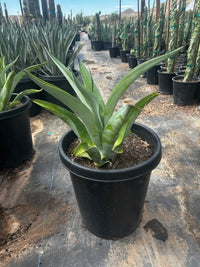
Pachycereus weberi for sale in Arizona, delivered to you
Pachycereus weberi, the candelabro, is one of the largest branching column cacti from Mexico. It grows slowly into a massive candelabra of bluish-green arms. Below are the questions Valley homeowners ask before planting one.
Sourced from trusted Arizona growers and delivered directly to your door, job site, or property. We deliver across the Valley and to nearby towns, and quote delivery anywhere else in Arizona.
Candelabro cactus in Arizona landscapes
Pachycereus weberi grows into a giant candelabra of bluish-green arms. It needs a large desert yard with room to spread about 30 feet.
How tall Pachycereus weberi gets
Over many years it can reach 30 to 40 feet tall on a thick trunk. It grows slowly, so plan the spot for the long run.
Pachycereus weberi fruit and seeds
The spiny fruit is eaten raw or cooked, and the seeds have been ground into flour. The night flowers are yellowish white.
Watering Pachycereus weberi
Water deeply only when the soil is dry in the warm months, and very little in winter. Plant it in fast-draining soil to prevent rot.
Frost care for Pachycereus weberi
It is rated to about 25 to 28°F. Cover the stem tips on colder nights.
Where the candelabro comes from
It grows in southern Mexico, in Guerrero, Oaxaca and Puebla. Its fruit and seeds are used as food there.
We deliver across the Valley, from Phoenix, Scottsdale and Mesa out to San Tan Valley, Maricopa and Casa Grande, and up to Prescott, Sedona, Payson and Globe. See delivery areas and rates.