


Actual size and flowering may vary slightly based on season.
Popcorn Aloe
Popcorn Aloe is a spreading aloe from Eritrea that forms rambling colonies of rosettes about 2 feet across. Over time a clump can reach about 3 feet tall and up to 6 feet wide. In early spring it sends up branched stalks of orange flowers, and hummingbirds visit them. It handles heat and needs little water once rooted, so it suits a low-water bed, a rock garden or a large pot.
Best for: filling a low-water bed with a spreading colony, orange spring flowers for hummingbirds, and a large pot in a hot spot.
It forms rambling colonies of rosettes about 2 feet across on short stems. A clump can reach about 3 feet tall and up to 6 feet wide.
In early spring it sends up branched stalks of orange flowers, about 3 feet tall. Hummingbirds come to feed on them.
It is heat tolerant and needs little water once rooted. It fits a low-water bed or a large pot where it gets sun or filtered shade.
It is rated to about 28°F, so cover it on colder nights. Wet soil in winter can rot the roots, so keep it on the dry side.
Skip water for a few days to a week after planting so the roots can heal. Then water to get it rooted, never leaving the soil soggy.
Once rooted, it needs little water; about every 2 weeks in the warm months is plenty. Keep it on the dry side in winter.
It is rated to about 28°F. On frosty nights, drape frost cloth or a sheet all the way to the ground, not plastic, and take it off in the morning.
It takes full sun to filtered shade and is heat tolerant, but filtered shade is where it looks best. Give the spreading colony room to fill in.
Drainage test first. Dig the hole and fill it with water. If water is still sitting in the hole a day later, you likely hit caliche, clay or hard soil, so fix the drainage before planting. If it drains very fast, the soil is sandy. Standing water around roots is a common reason new plants fail.
Weed cloth. Cut it away from the planting hole and where the roots will spread. Remove any plastic sheeting completely, since it keeps water and air out of the soil.
Rock or decomposed granite with no soil underneath. Bring in soil close in texture to your native soil, mix it with the soil below, and build up enough depth for roots before planting.
If you can break through. Use a breaker bar, pick, or jackhammer. Dig through the caliche and break out the solid chunks. Backfill with the soil you dug out, with no compost or manure in the hole. Confirm drainage before planting.
If you cannot break through. Dig narrow holes through the hard layer beside the root ball, not under it, and refill them with the same soil, not gravel. If it still will not drain, plant on a low mound of the same soil.
Root ball. Check the outside edges for any roots circling around. Loosen or cut those so they grow outward. Do not break up the center of the root ball.
Depth. The top of the root ball should sit at or just slightly above the surrounding soil level. Planting too deep can lead to rot and kill the plant.
Drip emitters. At planting, put the emitters on the root ball, on different sides of the plant. After about 2 months, move them to the outer edge of the root ball. Over the first year, add emitters farther out toward the edge of the branches as roots grow. Once a plant is rooted, never water only at the trunk.
How big does Popcorn Aloe get?
It grows about 2 to 3 feet tall. It spreads into a colony 2 to 6 feet wide, made of rosettes about 2 feet across.
When does it bloom?
It blooms in early spring, on branched stalks about 3 feet tall with orange flowers.
Does it bring hummingbirds?
Yes. Hummingbirds come to the flowers, so plant it where you can watch them from a window or patio.
Can it take full sun in Phoenix?
It takes full sun to filtered shade and is heat tolerant. Filtered shade is where it looks best.
How often should I water it?
Once rooted it needs little water. About every 2 weeks in the warm months is plenty. Keep it on the dry side in winter.
How cold hardy is Popcorn Aloe?
It is rated to about 28°F. On colder nights, drape frost cloth or a sheet to the ground, not plastic.
Can I grow it in a pot?
Yes. It is grown in containers. Use a pot with a drainage hole and a gritty mix, and give it room to spread.
Does it die after it blooms?
No. Aloes keep living after they bloom and flower again the next year. Cut off the dead flower stalks.
Is it toxic to pets?
Yes. Aloe is toxic to dogs, cats and horses. Chewing the leaves can cause vomiting, diarrhea and lethargy.


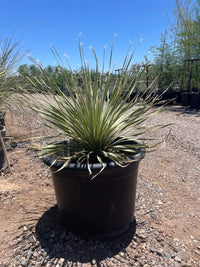
Popcorn Aloe for sale in Arizona, delivered to you
Popcorn Aloe, Aloe camperi, is a heat tolerant aloe from Eritrea and Ethiopia that spreads into colonies. It flowers orange in early spring. Below is what to expect in a Valley yard, from size and sun to water, cold and flowers.
Sourced from trusted Arizona growers and delivered directly to your door, job site, or property. We deliver across the Valley and to nearby towns, and quote delivery anywhere else in Arizona.
Aloe camperi, the popcorn aloe
Aloe camperi comes from Eritrea and Ethiopia. It grows as rambling colonies of rosettes, each about 2 feet across. It flowers orange in early spring.
How big does Popcorn Aloe get?
A colony grows about 2 to 3 feet tall and 2 to 6 feet wide. It spreads from rosettes on short stems. Give it room to fill in.
Popcorn Aloe in Phoenix heat
It is heat tolerant and takes full sun to filtered shade. It looks best with some filtered shade. Once rooted, it needs little water.
When does Popcorn Aloe bloom?
It blooms in early spring. The branched stalks reach about 3 feet and carry orange flowers. Hummingbirds come to feed on them.
Watering Popcorn Aloe
Water about every 2 weeks in the warm months once rooted, and let the soil dry between drinks. Keep it on the dry side in winter.
Is Popcorn Aloe cold hardy?
It is rated to about 28°F. Cover it with frost cloth or a sheet on colder nights, draped to the ground. Take the cover off in the morning.
We deliver across the Valley, from Phoenix, Scottsdale and Mesa out to San Tan Valley, Maricopa and Casa Grande, and up to Prescott, Sedona, Payson and Globe. See delivery areas and rates.