


Actual size and flowering may vary slightly based on season.
Purple Prickly Pear
Purple Prickly Pear is a desert native cactus grown for its round, blue-gray pads that turn deep purple in cold weather and dry spells. It forms a rounded clump about 4 to 6 feet tall and wide, with yellow flowers in spring and reddish-purple fruit after. It takes full sun and reflected heat, and needs very little water once rooted. Use it as a color accent against a light wall, in a big pot, or as a low barrier.
Best for: color against a light wall, large pots, low barriers along a property line, and hot west or south beds with reflected heat.
Set it against a white or light-colored wall and the purple pads stand out, most of all in winter. It takes full sun and the reflected heat that comes off walls and paving.
It grows well in a large pot with fast-draining cactus soil and a drainage hole. Water only when the soil is dry, and set the pot where no one brushes past it.
Planted in a row about 6 to 8 feet apart, it makes a low, spiny barrier or screen. It suits property lines and desert-style beds away from paths.
Soil that stays wet rots the roots. The spines and glochids make it a poor fit beside walkways, pools and play areas. It also gets cochineal scale more than most prickly pears.
- Tight row or barrier6 ft apart, center to center
- Looser row8 ft apart, center to center
Wait about a week after planting before the first water, then water every other week while nights stay above 60°F. Once rooted, soak it every 2 to 4 weeks in summer. Wrinkled pads mean it is thirsty. Give little or none in winter.
White cottony tufts that smear red are cochineal scale. Hose them off with a strong jet every few weeks, follow with insecticidal soap, and thin crowded pads.
It is rated to about 15°F. Deeper purple pads in cold or dry weather are normal. On a hard freeze night, cover young plants with frost cloth to the ground.
Cut off whole pads where they join, using long-handled loppers or tongs. Prune only to keep it in bounds or thin crowded pads.
Drainage test first. Dig the hole and fill it with water. If water is still sitting in the hole a day later, you likely hit caliche, clay or hard soil, so fix the drainage before planting. If it drains very fast, the soil is sandy. Standing water around roots is a common reason new plants fail.
Weed cloth. Cut it away from the planting hole and where the roots will spread. Remove any plastic sheeting completely, since it keeps water and air out of the soil.
Rock or decomposed granite with no soil underneath. Bring in soil close in texture to your native soil, mix it with the soil below, and build up enough depth for roots before planting.
If you can break through. Use a breaker bar, pick, or jackhammer. Dig through the caliche and break out the solid chunks. Backfill with the soil you dug out, with no compost or manure in the hole. Confirm drainage before planting.
If you cannot break through. Dig narrow holes through the hard layer beside the root ball, not under it, and refill them with the same soil, not gravel. If it still will not drain, plant on a low mound of the same soil.
Root ball. Check the outside edges for any roots circling around. Loosen or cut those so they grow outward. Do not break up the center of the root ball.
Depth. The top of the root ball should sit at or just slightly above the surrounding soil level. Planting too deep can lead to rot and kill the plant.
Drip emitters. At planting, put the emitters on the root ball, on different sides of the plant. After about 2 months, move them to the outer edge of the root ball. Over the first year, add emitters farther out toward the edge of the branches as roots grow. Once a plant is rooted, never water only at the trunk.
Why is my purple prickly pear not purple?
The pads are blue-gray in the warm months. They turn purple when it gets cold and in dry spells, so the color is strongest in winter.
How big does purple prickly pear get?
It usually grows 4 to 6 feet tall and about as wide. Some plants get wider over time. You can keep it smaller by cutting off whole pads.
How often should I water it in Phoenix?
Once it is rooted, a deep soak about once a month in the hot months is plenty. Skip it after a good rain. Let the soil dry out in between, and give little or none in winter.
Why are the pads wrinkled or shriveled?
Wrinkled pads usually mean the plant is thirsty after a long dry, hot stretch. A deep soak plumps them back up. Soft, mushy pads point to rot from too much water instead.
What is the white cottony stuff on my prickly pear?
That is cochineal scale, a small insect that hides under white fluff. Crush a bit and it stains red. It is very common on this cactus. Spray it off with a strong jet from the hose, and repeat every few weeks.
How cold can purple prickly pear take?
Cold hardiness is listed from about 10°F up to the mid 20s, with most ratings near 15°F. On hard freeze nights, cover it with frost cloth that reaches the ground and take it off in the morning.
Does it take reflected heat?
Yes, it thrives in full sun and in the reflected heat off walls and paving, and it takes some shade as well. A hot west or south bed suits it.
Does purple prickly pear have spines?
Yes. It has spines, and both pads and fruit carry glochids, tiny barbed hairs that stick in skin. Plant it back from walkways, the pool edge and play areas, and out of reach of pets.
How do I handle it or get glochids out of my skin?
Wear thick leather gloves and use long tongs, or grip pads with folded newspaper. To pull glochids from skin, press tape on and peel it off. A thin layer of white glue, peeled off once dry, also lifts most of them.
When does it bloom, and is the fruit edible?
Yellow flowers open in spring, and bees visit them. Small reddish-purple fruit ripens after the flowers, and it is edible.
Can I grow a new plant from a pad?
Yes, it roots easily from a pad. Cut it at the joint and let the cut end dry in the shade for a week or two. Plant it cut end down, 1 to 3 inches deep, and wait about a week to water.
Should I prune purple prickly pear?
It needs no regular pruning. To control size, or to open up crowded pads, cut whole pads off where they join. Long-handled loppers keep your hands away from the spines.

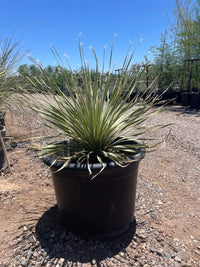


Purple Prickly Pear for sale in Arizona, delivered to you
Purple Prickly Pear, also sold as Santa Rita prickly pear, is one of the most colorful cacti grown in the Valley. Its pads shift from blue-gray in summer to purple in winter. Below are the questions people ask most about growing it in an Arizona yard, from size, sun and water to cold, flowers, fruit, handling and spacing.
Sourced from trusted Arizona growers and delivered directly to your door, job site, or property. We deliver across the Valley and to nearby towns, and quote delivery anywhere else in Arizona.
When does purple prickly pear turn purple?
The pads are blue-gray in summer and turn purple as nights get cold. Dry spells deepen the color too. Winter is when the purple is strongest.
How big does purple prickly pear get in Arizona?
Plan for a clump about 4 to 6 feet tall and wide. It grows at a moderate pace. Cutting off whole pads keeps it smaller if space is tight.
How often do you water purple prickly pear?
Once rooted, a deep soak about once a month in the hot months is enough. Skip it after a good rain. In winter it needs little or no water.
How far apart do you plant purple prickly pear?
For a row or low barrier, plant about 6 to 8 feet apart center to center. Each plant reaches about 4 to 6 feet across. The Spacing tab on this page counts plants for your bed.
How to grow purple prickly pear from a pad
It roots easily from a single pad. Cut it at the joint and let the cut end dry in the shade for a week or two. Plant it cut end down and wait about a week before watering.
Is purple prickly pear cold hardy in the Valley?
Ratings run from about 10°F to the mid 20s, most near 15°F. Cold weather is what brings out the purple color. On hard freeze nights, use frost cloth down to the ground.
Is purple prickly pear native to Arizona?
Yes. It grows wild in southeast Arizona and northern Mexico, in the Sonoran and Chihuahuan Deserts. It is also sold as Santa Rita prickly pear.
Purple prickly pear for reflected heat
It thrives in full sun and handles reflected heat from walls and paving. A west or south wall painted a light color shows off the purple pads.
We deliver across the Valley, from Phoenix, Scottsdale and Mesa out to San Tan Valley, Maricopa and Casa Grande, and up to Prescott, Sedona, Payson and Globe. See delivery areas and rates.