Roman Myrtle
5 Gallon
$26.49
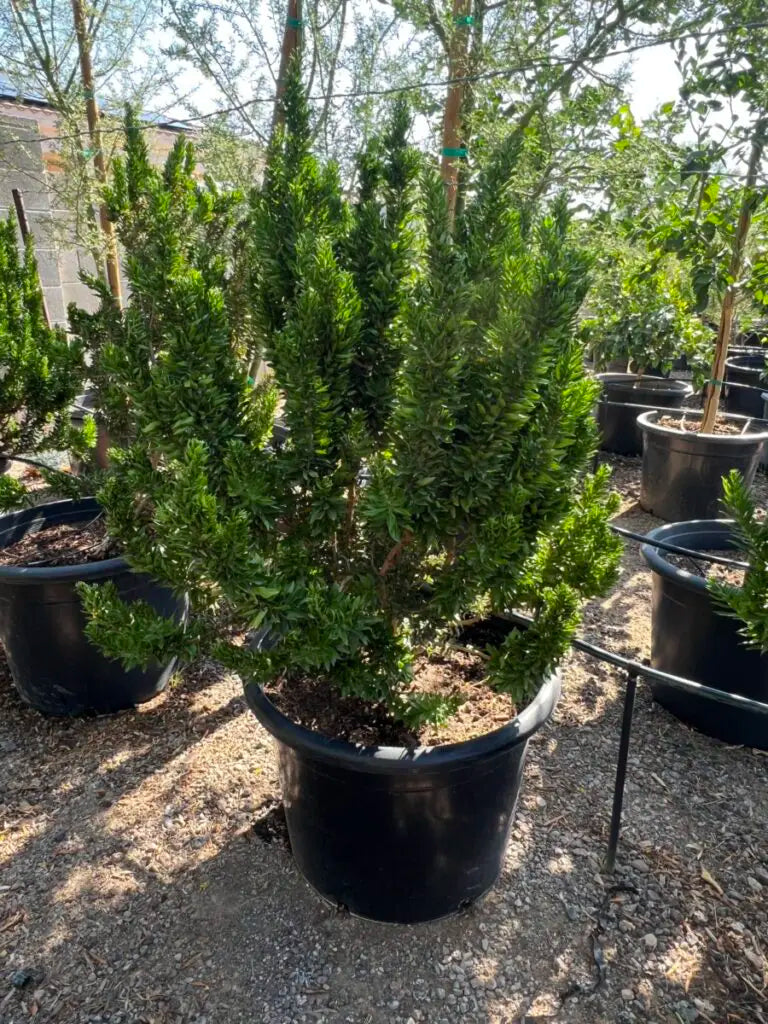
Roman Myrtle (Myrtus boetica), 25 gallon, Arizona Plant People
Roman Myrtle, 25 Gallon, Arizona Plant People
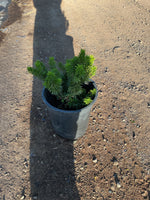
Roman Myrtle 5 Gallon

Actual size and flowering may vary slightly based on season.

🌿 What Arizona Plant People are saying
Real Arizona homeowners, gardeners, and pros share what this plant actually does in their yard. Planted it? Add yours below and you could be featured here.
Love this plant?
If you've planted this in your Arizona yard, share what you love about it, what worked, what didn't work, and what you'd tell the next person.
In Stock
Inventory availability is subject to change based on season and time of month.

Roman Myrtle

Myrtus communis 'Boetica'
Twisted branches and fragrant evergreen leaves
SunFull sun
WaterLow
BloomWhite
Height6-8 ft
Width4-6 ft
Cold hardy15°F
USDA zones8b-11
EvergreenFragrantPrivacy screenPatio sizeShears well
Found on 16 Valley community plant lists. Check with your community or HOA. Requirements are subject to change.
Arizona grown
Arrives healthy
Size
Results vary based on soil, season, sun, and watering. These reflect what this plant is capable of under good Arizona conditions.
1 GallonA small starter plant and the budget way to start a hedge row.
5 GallonA fuller plant for a hedge or large pot.
15 GallonA larger shrub that shows the twisted branches sooner.
25 GallonOur largest size, a mature-looking accent from day one. Container class can vary slightly by crop, and when it does we send the larger size.
$26.49
Straight from Arizona growers to your door.
✓ Added to your cart View cart
Questions? Reach us at (480) 620-4838 or hello@arizonaplantpeople.com.
Will it thrive in your climate?
Results based on climate and cold hardiness. For soil-specific guidance see Care and Planting.
Based on your ZIP's USDA hardiness zone, your part of Arizona, and this plant's cold rating.

Roman myrtle, also called twisted myrtle, is a slow-growing evergreen shrub with twisting stems and dense, dark green leaves that smell spicy when brushed. Small white flowers open in spring, followed by blue-black berries.

It handles Phoenix heat, takes shearing into hedges or topiary, and needs little water once rooted. Give it full sun and soil that drains well.

Best for: formal hedges, topiary, sculptural accents, and patio pots in full sun.

Where it works best in Arizona yards
Formal hedge
Shears into clean lines
↓

It responds well to shearing and can be clipped into a formal hedge. Plant it 4 feet apart for a tight row.

Sculptural accent
Twisted stems
↓

Its twisting branches make it a striking specimen. Trim it in midwinter to open up the inside and show the form.

Patio pots and small gardens
Slow and compact
↓

It grows slowly and stays about 6 to 8 feet, so it suits small gardens and large patio pots.

Where it struggles
Wet, alkaline soil
↓

Too much water and very alkaline, wet soil turn the leaves yellow. Plant it where water drains away and water deeply but not often.

Needs may vary based on your yard layout, desired density, sun and shade, and any underground wiring or piping.
  • Hedge row4 ft apart
  • Spaced accents6 ft apart
Hedge calculator
How many plants do you need for your fence line?
These are general guidelines. Conditions vary by soil type, sun, and time of year.
For this plant: Plant it in full sun in soil that drains well. Once rooted, water deeply but not often, and never keep it soggy. Trim it in midwinter to show the twisted branches, or shear it into a hedge.
Showing:
When to plant in the Valley
Jan
Feb
Mar
Apr
May
Jun
Jul
Aug
Sep
Oct
Nov
Dec
Ideal The easiest time to plant. Roots get the longest stretch of good weather to settle in.
Good Plantable with normal care. Roots settle in more slowly, but there is little stress.
Extra care needed Can be done with closer attention to watering while the plant settles in.
Most demanding The hardest window. Planting is possible, but expect frequent deep watering while it settles in.
This month Outlined in the strip.
This plant can go in the ground any time of year. The colors show how much effort getting it rooted takes in each month.
In the Valley, frost is possible from about Thanksgiving to Valentine's Day.
When to plant around Sedona, Cottonwood and Globe
Jan
Feb
Mar
Apr
May
Jun
Jul
Aug
Sep
Oct
Nov
Dec
Good Plantable with normal care. Roots settle in more slowly, but there is little stress.
Extra care needed Can be done with closer attention to watering while the plant settles in.
Most demanding The hardest window. Planting is possible, but expect frequent deep watering while it settles in.
This month Outlined in the strip.
This plant can go in the ground any time of year. The colors show how much effort getting it rooted takes in each month. Winter cold here can hurt this plant, so spring after the last frost is the safer time to plant.
At mid elevation the last frost usually comes between late March and late April; a later frost is possible.
When to plant around Prescott, Payson and Chino Valley
Jan
Feb
Mar
Apr
May
Jun
Jul
Aug
Sep
Oct
Nov
Dec
Good Plantable with normal care. Roots settle in more slowly, but there is little stress.
Extra care needed Can be done with closer attention to watering while the plant settles in.
Most demanding The hardest window. Planting is possible, but expect frequent deep watering while it settles in.
This month Outlined in the strip.
No data Not enough sources cover this month here yet.
The colors show how much effort getting it rooted takes in each month. Winter cold here can hurt this plant, so spring after the last frost is the safer time to plant.
In the high desert the last frost usually comes in early to mid May; frost is possible into late May or June.
When to plant around Flagstaff, Show Low and Williams
Not a good fit for the mountains. See the plant check above for why.
Watering
Deep but not frequent
↓

Water deeply but not often once it is rooted. It is drought tolerant, and too much water yellows the leaves. Let the soil dry between waterings.

Pruning
Midwinter shaping
↓

Trim it in midwinter to shape it and show the twisted branches. It also takes shearing into hedges and topiary.

Yellow leaves
Too much water
↓

Yellow leaves come from too much water or very alkaline, wet soil. Water less often and check that the soil drains.

Site and soil prep
Drainage test, weed cloth, rock and decomposed granite yards
↓

Drainage test first. Dig the hole and fill it with water. If water is still sitting in the hole a day later, you likely hit caliche, clay or hard soil, so fix the drainage before planting. If it drains very fast, the soil is sandy. Standing water around roots is a common reason new plants fail.

Weed cloth. Cut it away from the planting hole and where the roots will spread. Remove any plastic sheeting completely, since it keeps water and air out of the soil.

Rock or decomposed granite with no soil underneath. Bring in soil close in texture to your native soil, mix it with the soil below, and build up enough depth for roots before planting.

Caliche prep
Break through or mound over it
↓

If you can break through. Use a breaker bar, pick, or jackhammer. Dig through the caliche and break out the solid chunks. Backfill with the soil you dug out, with no compost or manure in the hole. Confirm drainage before planting.

If you cannot break through. Dig narrow holes through the hard layer beside the root ball, not under it, and refill them with the same soil, not gravel. If it still will not drain, plant on a low mound of the same soil.

Planting
Root ball, depth, emitter placement
↓

Root ball. Check the outside edges for any roots circling around. Loosen or cut those so they grow outward. Do not break up the center of the root ball.

Depth. The top of the root ball should sit at or just slightly above the surrounding soil level. Planting too deep can lead to rot and kill the plant.

Drip emitters. At planting, put the emitters on the root ball, on different sides of the plant. After about 2 months, move them to the outer edge of the root ball. Over the first year, add emitters farther out toward the edge of the branches as roots grow. Once a plant is rooted, never water only at the trunk.

Soil guide: tap any type for details
Sandy or loamy soil
Ideal
Soil that drains well is a must.
Native desert soil
Manageable
Alkaline soil is fine when it drains.
Very alkaline soil that stays wet yellows the leaves.
Clay
Manageable
It tolerates clay if water drains away.
Soggy clay yellows the leaves and harms the roots.
Caliche
Prep required
A caliche layer traps water around the roots.
Break through it when you dig so the planting hole drains.
Have a question?
Ask us anything about this plant and we will get back to you directly.

What is the difference between Roman myrtle and twisted myrtle?
They are the same plant, Myrtus communis Boetica. The twisted stems and leaves give it both names.

How big does Roman myrtle get?
It grows slowly to about 6 to 8 feet tall and 4 to 6 feet wide. Shear it to keep it smaller.

Can I shear Roman myrtle into a hedge?
Yes. It responds well to any pruning and can be sheared into hedges and formal shapes. Plant it 4 feet apart for a hedge.

When should I prune Roman myrtle?
Midwinter is the best time for a shaping trim. Thin inner branches to show off the twisted form.

How often should I water Roman myrtle?
Once rooted, water deeply but not often. It is drought tolerant, and too much water yellows the leaves.

Why are my myrtle leaves turning yellow?
Yellow leaves usually mean too much water or very alkaline, wet soil. Water less often and make sure the soil drains.

Is Roman myrtle fragrant?
Yes. The leaves smell spicy when brushed or crushed, and the small white flowers are fragrant too. Plant it near a walk where you brush past it.

How cold hardy is Roman myrtle?
It is rated to about 15°F, so it handles a normal Valley winter without cover.

Does Roman myrtle take full sun?
Yes. It handles Phoenix heat and full sun, and it also grows in part sun.

Real, approved advice from Arizona growers who have planted Roman Myrtle.
No tips here yet. If you've grown Roman Myrtle in an Arizona yard, use the "Love this plant?" box under the photo to share what worked. Approved tips show up here.

Roman Myrtle for sale in Arizona, delivered to you

Roman myrtle is a tough, fragrant evergreen for hedges and accents in the Valley. Its twisted stems give it a sculpted look. This page covers size, spacing, watering, pruning and yellow leaves.

Sourced from trusted Arizona growers and delivered directly to your door, job site, or property. We deliver across the Valley and to nearby towns, and quote delivery anywhere else in Arizona.

Roman myrtle in Phoenix

Roman myrtle is a slow, fragrant evergreen shrub with twisted stems. It handles Valley heat and needs little water once rooted.

Twisted myrtle for hedges

It responds well to shearing and can be clipped into hedges, topiary and formal shapes.

How far apart to plant Roman myrtle

Plant it 4 feet apart for a hedge and 6 feet apart for spaced accents.

Watering Roman myrtle

Water deeply but not often once rooted. Too much water yellows the leaves.

When to prune Roman myrtle

Midwinter is the best time to trim and show off the twisted branches.

Roman myrtle size

It grows slowly to about 6 to 8 feet tall and 4 to 6 feet wide.

We deliver across the Valley, from Phoenix, Scottsdale and Mesa out to San Tan Valley, Maricopa and Casa Grande, and up to Prescott, Sedona, Payson and Globe. See delivery areas and rates.