Actual size and flowering may vary slightly based on season.
Rosenka Bougainvillea Espalier
Rosenka Bougainvillea Espalier is trained flat on a trellis, made to dress up a bare wall or fence. Its bracts open gold to apricot and age to pink, so the wall shows warm color through each flush. It handles full sun and the reflected heat off a west wall. Tie new stems to the trellis as they grow, and water deeply with dry spells between.
Best for: covering a bare wall or block fence with flat-trained color, hot west walls, and narrow beds along a house or courtyard wall. It is an espalier Rosenka for gold-to-pink color that stays close to the wall.
An espalier is a plant trained flat against a wall on a trellis. Set it along a sunny wall or block fence and tie new stems to the trellis as they grow. It does not cling on its own.
Bougainvillea is one of the few flowering plants that handles the reflected heat off a west wall. Give it six or more hours of sun, in soil that drains well at the base of the wall.
For a longer wall, set plants about 6 to 8 feet apart, center to center, or closer to 6 feet for faster coverage. The Spacing tab counts plants for your wall.
Frost around 28 to 32°F can burn it back, though it usually regrows from the roots. The stems carry sharp thorns, and fallen bracts blow around. Keep it back from pools and walkways.
- Faster wall coverage6 ft apart
- Standard wall run6-8 ft apart
It does not cling on its own, so tie new shoots along the frame as they grow, using strong ties. Light trims after each bloom flush keep it tidy and bring new growth, which carries the color. Save heavier pruning for spring, after frost. Wear gloves and long sleeves for the thorns.
Water deeply on a set schedule through the first summer, starting often and easing to about once a week. Once rooted, soak it about every 7 to 10 days in summer and about once a month in winter. Let the soil dry between soaks, since too much water gives you leaves instead of color.
Frost damage starts around 28 to 32°F, and a freeze can strip the leaves. Cover it with frost cloth or an old sheet on frost nights, not plastic. Leave damaged stems alone until frost danger passes, usually by March, then cut back to the new growth. It regrows from the roots.
One light feeding in spring is enough. Do not feed it in winter. Heavy feeding gives lots of leaves and fewer flowers.
Ragged, chewed leaf edges and small black droppings point to bougainvillea loopers. These small green to brown inchworms feed at night and are hard to spot. A healthy plant handles the damage. Treat young plants or heavy damage with a BT caterpillar spray.
Drainage test first. Dig the hole and fill it with water. If water is still sitting in the hole a day later, you likely hit caliche, clay or hard soil, so fix the drainage before planting. If it drains very fast, the soil is sandy. Standing water around roots is a common reason new plants fail.
Weed cloth. Cut it away from the planting hole and where the roots will spread. Remove any plastic sheeting completely, since it keeps water and air out of the soil.
Rock or decomposed granite with no soil underneath. Bring in soil close in texture to your native soil, mix it with the soil below, and build up enough depth for roots before planting.
If you can break through. Use a breaker bar, pick, or jackhammer. Dig through the caliche and break out the solid chunks. Backfill with the soil you dug out, with no compost or manure in the hole. Confirm drainage before planting.
If you cannot break through. Dig narrow holes through the hard layer beside the root ball, not under it, and refill them with the same soil, not gravel. If it still will not drain, plant on a low mound of the same soil.
Root ball. Check the outside edges for any roots circling around. Loosen or cut those so they grow outward. Do not break up the center of the root ball.
Depth. The top of the root ball should sit at or just slightly above the surrounding soil level. Planting too deep can lead to rot and kill the plant.
Drip emitters. At planting, put the emitters on the root ball, on different sides of the plant. After about 2 months, move them to the outer edge of the root ball. Over the first year, add emitters farther out toward the edge of the branches as roots grow. Once a plant is rooted, never water only at the trunk.
What is an espalier?
An espalier is a plant trained to grow flat against a wall or fence on a trellis. It saves space in a narrow bed along a house or courtyard wall.
How do I train it on my wall?
Set it at the base of the wall or fence with its trellis behind it. Bougainvillea does not cling, so tie new stems to the trellis with plant ties as they grow.
What color is Rosenka?
The bracts open gold to apricot and turn pink as they age. The color is in the papery bracts, which surround small white true flowers.
How far apart should I plant espaliers along a wall?
Plant them about 6 to 8 feet apart, center to center, or about 6 feet apart for faster coverage. The Spacing tab counts plants for your wall length.
Can it take a hot west wall?
Yes. Bougainvillea is one of the few flowering plants that holds up on a hot west wall in the Valley. It loves heat and wants full sun for good color.
How big will it get on the wall?
Rosenka is one of the more compact bougainvilleas, about 3 to 5 feet tall as a bush. On a trellis its size depends on the support and how you prune it.
How often should I water it?
Water regularly through the first summer while it gets rooted. After that, water deeply and let the soil dry between waterings. It rarely needs water more than once a week.
When does it bloom?
It blooms in flushes from spring through fall, with leafy growth spurts between. A mild winter can keep it coloring, and color is often richest in the cooler months.
When do I prune it?
Do the main pruning in spring, after frost danger has passed, usually by March. Light trims between bloom flushes keep it neat. Wear gloves and long sleeves for the thorns.
What if frost hits it?
Frost around 28 to 32°F can burn the leaves and stems. Leave the damage until frost danger has passed or new growth shows. It usually regrows from the roots.
Is it messy?
The papery bracts drop and blow around, so keep it back from the pool and walkways. Its roots are not known to be aggressive.
Is it poisonous to pets?
It is not known to be poisonous to dogs or cats. The sharp thorns are the main thing to watch around pets.

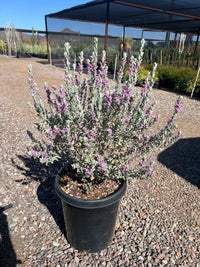


Rosenka Bougainvillea Espalier for sale in Arizona, delivered to you
Rosenka Bougainvillea Espalier is the Rosenka variety trained flat on a trellis to grow against a wall or fence. Its bracts open gold and age to pink. This page covers how to set it against a wall, space it, water it and prune it in the Valley.
Sourced from trusted Arizona growers and delivered directly to your door, job site, or property. We deliver across the Valley and to nearby towns, and quote delivery anywhere else in Arizona.
What is an espalier bougainvillea?
It is a bougainvillea trained flat on a trellis so it grows against a wall or fence. You get a sheet of color on the wall instead of a big shrub. The stems still need tying in as they grow.
How do you train a bougainvillea espalier on a wall?
Plant the espalier at the base of the wall or fence with its trellis behind it. Bougainvillea does not cling, so tie new stems to the trellis with plant ties. Handle the root ball gently at planting.
What is the best bougainvillea for a west wall in Phoenix?
Bougainvillea is one of the few flowering plants that handles the reflected heat off a west wall, and it loves summer heat. Rosenka adds gold bracts that age to pink.
How far apart do you plant bougainvillea espaliers along a wall?
Plant about 6 to 8 feet apart, center to center, along a wall. Go closer to 6 feet for quicker coverage. The Spacing tab on this page counts plants for your wall.
How often do you water a bougainvillea espalier?
Water regularly through the first summer while it roots in. Then water deeply and let the soil dry between waterings. Too much water gives leaves instead of color.
When should you prune bougainvillea in Arizona?
Do the main pruning in spring once frost danger has passed. Leave any frost damage on until then, usually March. Light trims between flushes keep it tidy.
We deliver across the Valley, from Phoenix, Scottsdale and Mesa out to San Tan Valley, Maricopa and Casa Grande, and up to Prescott, Sedona, Payson and Globe. See delivery areas and rates.