


Actual size and flowering may vary slightly based on season.
White Trailing Lantana
White Trailing Lantana is a low, fast-spreading groundcover that stays about 1 to 2 feet tall and fills 3 to 6 feet across. Clusters of white flowers cover it from spring until the first frost, and butterflies and bees visit them. It takes full sun and reflected heat, covers banks and slopes, and spills over walls and planters. Once rooted in, it is drought tolerant.
Best for: covering open beds, holding banks and slopes, spilling over walls and planters, and hot spots with reflected heat.
It stays about 1 to 2 feet tall and spreads 3 to 6 feet. It can form a full, dense cover in a single growing season. Plant about 4 to 6 feet apart center to center.
Trailing lantana is planted on banks and slopes for erosion control. It also cascades over walls, raised beds, and the edges of big pots, where the trailing stems show off.
It handles full sun and the reflected heat off walls, driveways, and sidewalks. It also grows in part shade, with more flowers in more sun. Once rooted in, it is drought tolerant.
Leaves are damaged around 25 to 27°F and can freeze to the ground in the mid 20s, then it regrows from the roots. The leaves and berries are toxic to pets, and whiteflies can build up in late summer.
- Faster coverAbout 4 ft apart
- Standard groundcoverAbout 4 to 6 ft apart
- Loose or single plantsAbout 6 ft apart
Water often for the first few weeks, then taper off. Once rooted, water about once a week in summer and less often in the cooler months. It blooms best with regular summer water.
Frost can burn it back in a cold winter. Leave the damage until frost danger passes, usually early March, then cut it back to about 6 inches or near the ground. It regrows from the base.
Whiteflies are the main pest on lantana. Control them if they build up.
It handles full sun and reflected heat and blooms more with more sun. It also takes part shade.
Drainage test first. Dig the hole and fill it with water. If water is still sitting in the hole a day later, you likely hit caliche, clay or hard soil, so fix the drainage before planting. If it drains very fast, the soil is sandy. Standing water around roots is a common reason new plants fail.
Weed cloth. Cut it away from the planting hole and where the roots will spread. Remove any plastic sheeting completely, since it keeps water and air out of the soil.
Rock or decomposed granite with no soil underneath. Bring in soil close in texture to your native soil, mix it with the soil below, and build up enough depth for roots before planting.
If you can break through. Use a breaker bar, pick, or jackhammer. Dig through the caliche and break out the solid chunks. Backfill with the soil you dug out, with no compost or manure in the hole. Confirm drainage before planting.
If you cannot break through. Dig narrow holes through the hard layer beside the root ball, not under it, and refill them with the same soil, not gravel. If it still will not drain, plant on a low mound of the same soil.
Root ball. Check the outside edges for any roots circling around. Loosen or cut those so they grow outward. Do not break up the center of the root ball.
Depth. The top of the root ball should sit at or just slightly above the surrounding soil level. Planting too deep can lead to rot and kill the plant.
Drip emitters. At planting, put the emitters on the root ball, on different sides of the plant. After about 2 months, move them to the outer edge of the root ball. Over the first year, add emitters farther out toward the edge of the branches as roots grow. Once a plant is rooted, never water only at the trunk.
How big does White Trailing Lantana get, and how fast?
It grows about 1 to 2 feet tall and 3 to 6 feet wide. It grows fast and can reach close to full size in its first growing season.
How far apart should I plant it as a groundcover?
Plant it about 4 to 6 feet apart center to center. Go about 4 feet for faster cover, or about 6 feet for a looser planting. The Spacing tab can count plants for your bed.
Which size should I buy?
The 1 gallon is the usual choice for covering a bed or slope, since it fills in fast. The 5 gallon gives a fuller start for a planter, wall top, or front bed. See the size guide for both.
Will it work on a slope?
Yes. Trailing lantana is planted on banks and slopes as a groundcover and for erosion control. It also trails down over walls and the edges of raised beds.
Can it take full sun and reflected heat?
Yes. It handles full sun and the reflected heat off walls, driveways, and sidewalks. It also grows in part shade, but it flowers more with more sun.
How often should I water it?
Water often for the first few weeks, then taper off as it roots in. Once rooted, a watering about once a week in summer keeps it looking its best. Water less often in the cooler months.
When does it bloom?
White flower clusters show up from spring until the first frost. In a mild winter it can keep blooming all year.
What happens in a freeze, and when do I cut it back?
Leaves are damaged around 25 to 27°F, and it can freeze to the ground in the mid 20s. The roots hold to about 20°F and it regrows. Leave the damage until frost danger has passed, usually early March, then cut it back to about 6 inches.
Is White Trailing Lantana safe for dogs and cats?
No. Lantana is listed as toxic to dogs, cats, and horses, and the berries are poisonous. Eating it can cause vomiting, diarrhea, and weakness. The leaves can also irritate skin, so wear gloves when you prune.
Does it attract butterflies, and will rabbits eat it?
Butterflies and bees visit the flowers. The leaves are strongly scented when brushed, and rabbits and deer tend to leave it alone.
What are the common problems?
Whiteflies are the main pest on lantana, and they can show up in clouds in late summer. Control them if they build up. Frost damage in a cold winter is the other common issue.
Can White Trailing Lantana bother allergies?
Yes, it can. Its pollen can bother people with allergies.
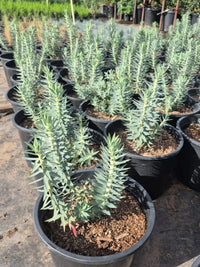


White Trailing Lantana for sale in Arizona, delivered to you
White Trailing Lantana is a low, trailing lantana grown across the Valley as a flowering groundcover. It spreads fast, blooms white through the warm months, and takes full sun and reflected heat. Below are the questions people ask most, from spacing and watering to slopes and spring cutback.
Sourced from trusted Arizona growers and delivered directly to your door, job site, or property. We deliver across the Valley and to nearby towns, and quote delivery anywhere else in Arizona.
How big does white trailing lantana get in Arizona?
Expect about 1 to 2 feet tall and 3 to 6 feet wide. It grows fast and can form a full, dense cover in a single growing season.
How far apart do you plant trailing lantana?
Plant about 4 to 6 feet apart center to center for a groundcover. About 4 feet fills in faster, and about 6 feet gives a looser look. The spacing calculator can count plants for your bed.
Trailing lantana for slopes and banks
Trailing lantana is planted on banks and slopes as a groundcover and for erosion control. It trails down over walls and the edges of raised beds.
Watering white trailing lantana in Phoenix
Water often for the first few weeks, then taper off. Once rooted, it is drought tolerant, but about once a week in summer keeps it full and blooming. Water less often in the cooler months.
Trailing lantana for reflected heat
It handles full sun and the reflected heat off walls, driveways, and sidewalks. It also grows in part shade, with fewer flowers.
Cutting back trailing lantana after a freeze
Leave frost damage in place until frost danger has passed, usually early March in the Valley. Then cut it back, as low as about 6 inches. It regrows from the roots.
White vs purple trailing lantana
Both are the same kind of trailing lantana and grow much the same way. The white form has white flower clusters, and the purple form has lavender ones.
What soil does trailing lantana need?
It grows in clay, loam, or sand, and it handles alkaline soil as long as water drains. It also tolerates poor soil.
We deliver across the Valley, from Phoenix, Scottsdale and Mesa out to San Tan Valley, Maricopa and Casa Grande, and up to Prescott, Sedona, Payson and Globe. See delivery areas and rates.