


Actual size and flowering may vary slightly based on season.
Willow Acacia
Willow Acacia is a fast, evergreen tree from Australia with long, narrow, drooping leaves that give it a weeping look. It grows taller than it spreads, about 20 to 40 feet tall and 15 to 20 feet wide, so it fits narrow yards and tall screens. It takes full sun and reflected heat, and it needs little water once it is rooted. In spring it carries cream puffball flowers with a sweet scent.
Best for: tall evergreen screens along a property line, narrow side yards and parking strips that need height more than width, and fast shade in hot, sunny spots.
It grows taller than it spreads, about 20 to 40 feet tall and 15 to 20 feet wide, so it fits narrow side yards. Plant a row about 12 to 15 feet apart along a property line for a tall evergreen screen. It keeps its leaves all year.
Young trees can grow about 2 to 3 feet a year, and it handles full sun and reflected heat. Once it is rooted, a deep soak every 2 to 4 weeks in summer keeps it going, with much less water in winter.
Its upright shape suits space-limited spots like parking areas and street plantings. Water deep and spaced weeks apart, since that builds strong roots that hold it in wind. Frequent shallow watering does the opposite.
Soil that stays wet leads to yellow leaves and weak roots. Untrained trees can lose limbs or tip over in monsoon storms, so stake and train it while young. Root suckers and a steady drop of leaves, flowers and pods make it a poor pick right beside a pool.
- Screen row12-15 ft apart
- Looser group15-20 ft apart
A new tree needs water every 1 to 2 days in summer for its first two weeks, or every 3 to 4 days when it is cool. Stretch that to about weekly by the second month, and keep watering deeply and regularly for about 3 years. After that, a deep soak out at the canopy edge every 2 to 4 weeks in summer, and much less in winter, is plenty.
Remove the nursery stake when you plant. If the tree leans or the spot is windy, set two stakes outside the root ball, with soft, wide ties that leave a little room to sway. Take the stakes out after about a year. Tree acacias grow top-heavy, so many need stakes while young.
Stake and train it young so it grows strong branch angles. Untrained trees can lose limbs or tip over in monsoon storms, so thin the canopy before monsoon season. Keep it to no more than a quarter of the canopy a year, and never thin out the middle so only branch tips are left.
Frequent watering or soggy ground can lead to root rot and yellow leaves. Deep soaks with dry spells in between suit it best.
Drainage test first. Dig the hole and fill it with water. If water is still sitting in the hole a day later, you likely hit caliche, clay or hard soil, so fix the drainage before planting. If it drains very fast, the soil is sandy. Standing water around roots is a common reason new plants fail.
Weed cloth. Cut it away from the planting hole and where the roots will spread. Remove any plastic sheeting completely, since it keeps water and air out of the soil.
Rock or decomposed granite with no soil underneath. Bring in soil close in texture to your native soil, mix it with the soil below, and build up enough depth for roots before planting.
If you can break through. Use a breaker bar, pick, or jackhammer. Dig through the caliche and break out the solid chunks. Backfill with the soil you dug out, with no compost or manure in the hole. Confirm drainage before planting.
If you cannot break through. Dig narrow holes through the hard layer beside the root ball, not under it, and refill them with the same soil, not gravel. If it still will not drain, plant on a low mound of the same soil.
Root ball. Check the outside edges for any roots circling around. Loosen or cut those so they grow outward. Do not break up the center of the root ball.
Depth. The top of the root ball should sit at or just slightly above the surrounding soil level. Planting too deep can lead to rot and kill the plant.
Drip emitters. At planting, put the emitters on the root ball, on different sides of the plant. After about 2 months, move them to the outer edge of the root ball. Over the first year, add emitters farther out toward the edge of the branches as roots grow. Once a plant is rooted, never water only at the trunk.
How big does Willow Acacia get?
Most reach about 20 to 40 feet tall and 15 to 20 feet wide, and some old trees reach 50 feet. It grows taller and narrower than most desert trees, so plant it where a tall, slim tree fits, like a side yard or property line.
How fast does Willow Acacia grow?
Willow Acacia grows fast, and young trees can put on about 2 to 3 feet a year in the Valley heat. That fast growth makes young trees top-heavy, so stake and train it early.
How far apart should I plant Willow Acacia?
Plant about 12 to 15 feet apart, center to center, for a screen row, or 15 to 20 feet apart for a looser group. The Spacing tab shows both.
How often should I water Willow Acacia?
Once it is rooted, give it a deep soak every 2 to 4 weeks in summer and much less in winter. Deep watering spaced out builds deep roots that anchor the tree. Frequent shallow watering does the opposite.
Is Willow Acacia evergreen, and does it flower?
Yes, it keeps its leaves all year. Cream puffball flowers with a sweet scent come mostly in spring, and it can flower at other times of year too. Small pods follow the flowers.
How cold hardy is Willow Acacia?
It is rated hardy to about 16 to 20°F, and a hard frost can still damage leaves and twigs. Cover young trees with frost cloth on the coldest nights.
Can Willow Acacia blow over in a monsoon?
Yes, it can. Untrained trees can lose limbs or tip over in monsoon storms. Stake it while young, train it early, thin the canopy so wind passes through, and water deep and infrequently.
How should I prune Willow Acacia?
Start pruning and training it early. Remove branches that join the trunk at a narrow angle, raise the canopy over time, and take out dead or damaged limbs. Thinning the canopy cuts down on wind resistance.
Does Willow Acacia send up suckers?
Yes. Suckers come up from its shallow roots, sometimes 20 feet or more from the trunk, and seedlings can sprout too. Pull or clip them to keep them in check.
Is Willow Acacia messy?
It drops a moderate amount. Expect narrow leaves, spent flowers, fine twigs and small seed pods through the year, so plant it away from pools and spots you want to keep spotless.
Can I plant Willow Acacia near my pool?
It is better set back from the pool. It drops leaves, flowers and pods, and suckers come up from its shallow roots, so plant it well away from the pool deck.
What soil does Willow Acacia need?
It takes most Valley soils, from sand to clay, including alkaline soil, as long as it drains well. Soil that stays wet can lead to yellow leaves and root rot.


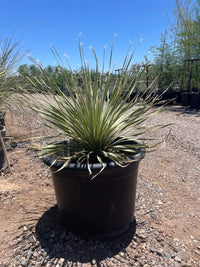
Willow Acacia for sale in Arizona, delivered to you
Willow Acacia is a fast-growing evergreen tree from Australia, planted across southern Arizona for its weeping look and its tall, narrow shape. It is a common choice for screens and tight spaces on low water. Below is what to expect in a Valley yard, from size, spacing and water to pruning, bloom and how it compares with shoestring acacia.
Sourced from trusted Arizona growers and delivered directly to your door, job site, or property. We deliver across the Valley and to nearby towns, and quote delivery anywhere else in Arizona.
Willow Acacia for tall, narrow screens in Phoenix
Willow Acacia grows up more than out, which is why it gets planted in narrow side yards and along property lines. It stays green all year and grows fast. A row of them makes a tall screen on low water.
How big does Willow Acacia get in Arizona?
Plan on about 20 to 40 feet tall and 15 to 20 feet wide. Some old trees reach 50 feet. Young trees can grow about 2 to 3 feet a year.
How far apart do you plant Willow Acacia for a screen?
For a screen row, space trees about 12 to 15 feet apart, center to center. For a looser group, plant them 15 to 20 feet apart. The Spacing tab on this page lays out both.
How often do you water Willow Acacia?
Once it is rooted, a deep soak every 2 to 4 weeks in summer is enough, with much less in winter. Water deep and spaced out. That builds deep roots that hold the tree in wind.
Willow Acacia and monsoon storms
Fast growth and drooping branches make training important. Stake it while young, remove narrow-angled branches, and thin the canopy so wind can pass through. Deep, infrequent watering helps it root deep.
When does Willow Acacia bloom?
The main bloom comes in spring, with round cream puffball flowers that smell sweet. It can flower at other times of year too. Small seed pods follow the flowers.
Willow Acacia vs Shoestring Acacia
Both are weeping trees from Australia of about the same size. The easy way to tell them apart is the leaves. Shoestring acacia leaves are much longer, up to about 16 inches.
How cold hardy is Willow Acacia?
It is rated hardy to about 16 to 20°F. A hard frost can still damage leaves and twigs, so cover young trees with frost cloth on the coldest nights.
We deliver across the Valley, from Phoenix, Scottsdale and Mesa out to San Tan Valley, Maricopa and Casa Grande, and up to Prescott, Sedona, Payson and Globe. See delivery areas and rates.