
Actual size and flowering may vary slightly based on season.
Cat Claw Vine
Cat claw vine is one of the fastest ways to cover a hot block wall in Arizona. It climbs on its own with small three-pronged claws, needs no trellis or wire, and fills in with glossy green leaves and bright yellow trumpet flowers in spring. It takes full sun and reflected west-wall heat on little water once established.
Best for: covering block walls fast, hot west and south walls, and hiding chain link or bare structures.
Claw-like tendrils grip block, brick and wood on their own, so it covers a bare wall quickly with no wires or trellis. One vine can spread about 25 feet, so plant them 20 to 25 feet apart along a long wall.
It handles full sun and the reflected heat off the hottest walls on a property, where many vines scorch. Plant it in a narrow bed between the wall and a walk or patio, which also keeps it from spreading.
It covers chain-link fences, utility walls and other bare structures fast, turning them into a green backdrop. Glossy leaves stay on through mild winters, and bright yellow trumpet flowers open in spring.
It spreads by underground tubers and seed and is very hard to remove once it is established. The claws dig into masonry and stucco, and older top-heavy growth can peel away in high winds. Plant it only where you want permanent cover, and cut it back hard every few years.
- Along a block wall20-25 ft apart, center to center
- Along a chain-link fence20-25 ft apart, center to center
Once rooted it needs little water. Extra irrigation makes it grow faster, which is not always what you want.
Prune hard after the short spring bloom to keep it in bounds. Every few years it can be cut to the ground and it regrows.
It clings to walls on its own and can damage masonry and stucco. Top-heavy growth can pull loose in wind, so trim it back from the top.
It grows from underground tubers, so it is hard to get rid of. Plant it only where you want it long term.
Drainage test first. Dig the hole and fill it with water. If water is still sitting in the hole a day later, you likely hit caliche, clay or hard soil, so fix the drainage before planting. If it drains very fast, the soil is sandy. Standing water around roots is a common reason new plants fail.
Weed cloth. Cut it away from the planting hole and where the roots will spread. Remove any plastic sheeting completely, since it keeps water and air out of the soil.
Rock or decomposed granite with no soil underneath. Bring in soil close in texture to your native soil, mix it with the soil below, and build up enough depth for roots before planting.
If you can break through. Use a breaker bar, pick, or jackhammer. Dig through the caliche and break out the solid chunks. Backfill with the soil you dug out, with no compost or manure in the hole. Confirm drainage before planting.
If you cannot break through. Dig narrow holes through the hard layer beside the root ball, not under it, and refill them with the same soil, not gravel. If it still will not drain, plant on a low mound of the same soil.
Root ball. Check the outside edges for any roots circling around. Loosen or cut those so they grow outward. Do not break up the center of the root ball.
Depth. The top of the root ball should sit at or just slightly above the surrounding soil level. Planting too deep can lead to rot and kill the plant.
Drip emitters. At planting, put the emitters on the root ball, on different sides of the plant. After about 2 months, move them to the outer edge of the root ball. Over the first year, add emitters farther out toward the edge of the branches as roots grow. Once a plant is rooted, never water only at the trunk.
How fast does cat claw vine grow?
It is a very fast grower. It climbs high on its own and can reach 25 to 40 feet, covering the top of tall walls and buildings. Plan on regular pruning to keep it in bounds.
Does it need a trellis?
No. Hooked, three-pronged tendrils grab rough surfaces like block, brick, and wood, so it climbs without wires or support.
Will cat claw vine damage my wall or stucco?
Yes, it can. The claws dig into masonry and stucco and can mark or deface the surface, and removing a mature vine can take finish with it. Plant it only on walls you intend to keep covered.
When does it bloom?
In spring, with bright yellow trumpet flowers about 2 inches long. The show is impressive but short-lived, and slender bean-like pods 12 to 15 inches long may follow.
Is cat claw vine invasive?
It is an aggressive grower. It spreads by underground tubers and wind-carried seed, and it is listed as invasive in Florida, where selling or planting it is prohibited. In a desert yard it stays manageable with regular pruning and by pulling stray shoots.
How do I keep it under control?
Prune the whole plant hard after it blooms, and cut some stems nearly to the ground to push new growth lower down.
How do I get rid of cat claw vine?
Expect it to take persistence. Cut the vine near the root and treat the cut stem right away with a glyphosate or triclopyr weed killer. Dig out as many tubers as you can. Keep removing new shoots, since leftover tubers resprout.
How much water does it need?
It needs little water once it is established. It is drought tolerant, but it grows faster and looks fuller with regular watering once or twice a month from spring through fall, in soil that drains.
Is it cold hardy?
It is hardy to about 15°F. It stays green in mild winters but can lose all its leaves in a cold one, then leafs back out in spring.
Why did a big section fall off my wall?
Older, top-heavy growth can pull away from walls in high winds. Cutting it back hard every few years keeps the vine lighter and it reattaches as it regrows.
Do scorpions live in cat claw vine?
Yes, they often do. Scorpions, ants and other biting insects commonly shelter in the dense vine, so wear gloves and long sleeves when you prune it.
Is cat claw vine messy?
Yes. It drops a lot of litter, so plan on cleanup under it. Spent flowers fall after the spring bloom, then the long seed pods, and a cold winter can strip its leaves.
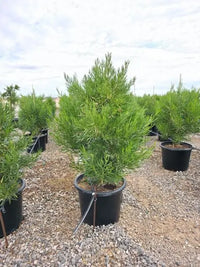


Cat Claw Vine for sale in Arizona, delivered to you
Cat claw vine is the classic fast cover for hot block walls in the Valley. It climbs on its own, takes reflected heat on little water, and opens bright yellow trumpet flowers each spring. This page answers the questions Arizona gardeners ask most.
Sourced from trusted Arizona growers and delivered directly to your door, job site, or property. We deliver across the Valley and to nearby towns, and quote delivery anywhere else in Arizona.
Cat claw vine for block walls
It climbs block, brick and wood on its own with claw-like tendrils and can reach 25 to 40 feet. Space vines 20 to 25 feet apart along a long wall.
Cat claw vine bloom time
Bright yellow trumpet flowers open in spring. The show is short but dramatic, followed by long slender pods.
Watering cat claw vine in Phoenix
It needs little water once established. Watering once or twice a month from spring through fall gives faster growth and fuller cover.
Pruning and control
Prune hard after bloom and cut some stems near the ground every few years to keep it full and lighter on the wall.
Is cat claw vine invasive?
It spreads by tubers and seed and is listed as invasive in Florida. In the desert it stays in bounds with regular pruning and a confined bed.
Cat claw vine in winter
It is hardy to about 15°F. It stays green in mild winters and can drop its leaves in a cold one, then leafs back out in spring.
We deliver across the Valley, from Phoenix, Scottsdale and Mesa out to San Tan Valley, Maricopa and Casa Grande, and up to Prescott, Sedona, Payson and Globe. See delivery areas and rates.