


Actual size and flowering may vary slightly based on season.
San Pedro
San Pedro is a fast-growing, blue-green column cactus from the Andes with short spines along its ribs. Over the years it branches into a clump 10 to 20 feet tall. Mature plants open large, fragrant white flowers on summer nights. It is hardy to about 15°F once established and needs little water.
Best for: a fast vertical backdrop, fragrant summer night flowers, and large pots.
It grows fast for a cactus and branches into a clump 10 to 20 feet tall over the years. A few in a row make a tall blue-green backdrop sooner than most column cacti.
Mature plants open large, fragrant white flowers at night in summer. Plant it where you will walk by on warm evenings.
Young plants do well in big pots with a fast-draining cactus mix and a drainage hole. Pots dry out faster than the ground, so check the soil often in summer.
It rots in soggy soil, so keep it off lawn or shrub drip lines. Plants moved into hard afternoon sun too fast can scar from sunburn.
- Group planting5 ft apart
- Planted with more room6 ft apart
Wait about a week after planting, then water every other week while nights are above 60°F. In cool weather, water only after 2 to 4 dry weeks.
Give it a deep soak once or twice a month in summer when the soil is dry, and keep winter water to long dry spells. Pots dry out faster than the ground, so check them more often.
Set it facing the same way it grew. Give new or young plants light shade in the hottest months until they toughen up.
Established plants take about 15°F, and young ones are more tender. On hard freeze nights, cap the tips with foam cups or use frost cloth to the ground.
Drainage test first. Dig the hole and fill it with water. If water is still sitting in the hole a day later, you likely hit caliche, clay or hard soil, so fix the drainage before planting. If it drains very fast, the soil is sandy. Standing water around roots is a common reason new plants fail.
Weed cloth. Cut it away from the planting hole and where the roots will spread. Remove any plastic sheeting completely, since it keeps water and air out of the soil.
Rock or decomposed granite with no soil underneath. Bring in soil close in texture to your native soil, mix it with the soil below, and build up enough depth for roots before planting.
If you can break through. Use a breaker bar, pick, or jackhammer. Dig through the caliche and break out the solid chunks. Backfill with the soil you dug out, with no compost or manure in the hole. Confirm drainage before planting.
If you cannot break through. Dig narrow holes through the hard layer beside the root ball, not under it, and refill them with the same soil, not gravel. If it still will not drain, plant on a low mound of the same soil.
Root ball. Check the outside edges for any roots circling around. Loosen or cut those so they grow outward. Do not break up the center of the root ball.
Depth. The top of the root ball should sit at or just slightly above the surrounding soil level. Planting too deep can lead to rot and kill the plant.
Drip emitters. At planting, put the emitters on the root ball, on different sides of the plant. After about 2 months, move them to the outer edge of the root ball. Over the first year, add emitters farther out toward the edge of the branches as roots grow. Once a plant is rooted, never water only at the trunk.
How big does San Pedro get?
Over the years it reaches about 10 to 20 feet tall, branching into a clump about 3 to 5 feet wide.
How fast does San Pedro grow?
It is one of the faster column cacti. Growth is quickest with warm weather and the occasional deep summer soak.
Does San Pedro take full sun in Phoenix?
Established plants take full sun, and it also grows in part sun. Young plants and new plantings do better with light shade their first summer.
How often should I water San Pedro in Phoenix?
In the ground, give it a deep soak once or twice a month in summer and less in spring and fall. In winter, water only in a long dry spell, and let the soil dry out between soaks.
Is San Pedro cold hardy?
It takes about 15°F once established, and young plants are more tender. On hard freeze nights, cap the tips with foam cups or cover it with frost cloth to the ground.
Can I leave frost cloth on all winter?
Frost cloth breathes, so it can stay on through a short cold stretch. Take it off once the freeze passes, and never use plastic, which traps moisture against the skin.
When does San Pedro bloom?
Mature plants bloom in summer. The large white flowers are fragrant and open at night.
Why is my cactus getting yellow or white patches?
Pale, bleached, or tan patches on the side facing the sun are usually sunburn. It often shows up after a plant is set in facing a new direction. The scar stays but is mostly cosmetic. Soft, dark, mushy spots are different and point to rot from too much water.


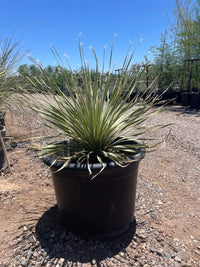

San Pedro for sale in Arizona, delivered to you
San Pedro is one of the faster column cacti you can grow in the Valley. It opens large, fragrant white flowers on summer nights and gets by on little water. Below are the questions people ask most about growing it here.
Sourced from trusted Arizona growers and delivered directly to your door, job site, or property. We deliver across the Valley and to nearby towns, and quote delivery anywhere else in Arizona.
How big and how fast does San Pedro grow?
Plan on 10 to 20 feet tall over the years, in a clump about 3 to 5 feet wide. It grows faster than most column cacti.
Planting San Pedro in Phoenix
Spring and early summer plantings root in fastest. Winter plantings sit still in cold soil, and midsummer plantings face more sunburn. Plant into dry soil and keep the side that faced south at the nursery facing south again. Wait a week or two before the first watering.
How often to water San Pedro
Water about once or twice a month in summer, less in spring and fall, and only in long dry spells in winter. Let the soil dry between soaks, because soggy soil rots it.
Protecting San Pedro from frost
San Pedro handles about 15°F once established, but young plants are more tender. Cover it with frost cloth that reaches the ground and slip foam cups over the stem tips. Skip plastic, which traps moisture against the skin.
San Pedro sun in Phoenix
Established plants take full sun. Young plants want light shade their first summer, and a plant moved into hard sun too fast can scar.
San Pedro flowers
Mature plants bloom in summer with large, fragrant white flowers that open at night.
We deliver across the Valley, from Phoenix, Scottsdale and Mesa out to San Tan Valley, Maricopa and Casa Grande, and up to Prescott, Sedona, Payson and Globe. See delivery areas and rates.